

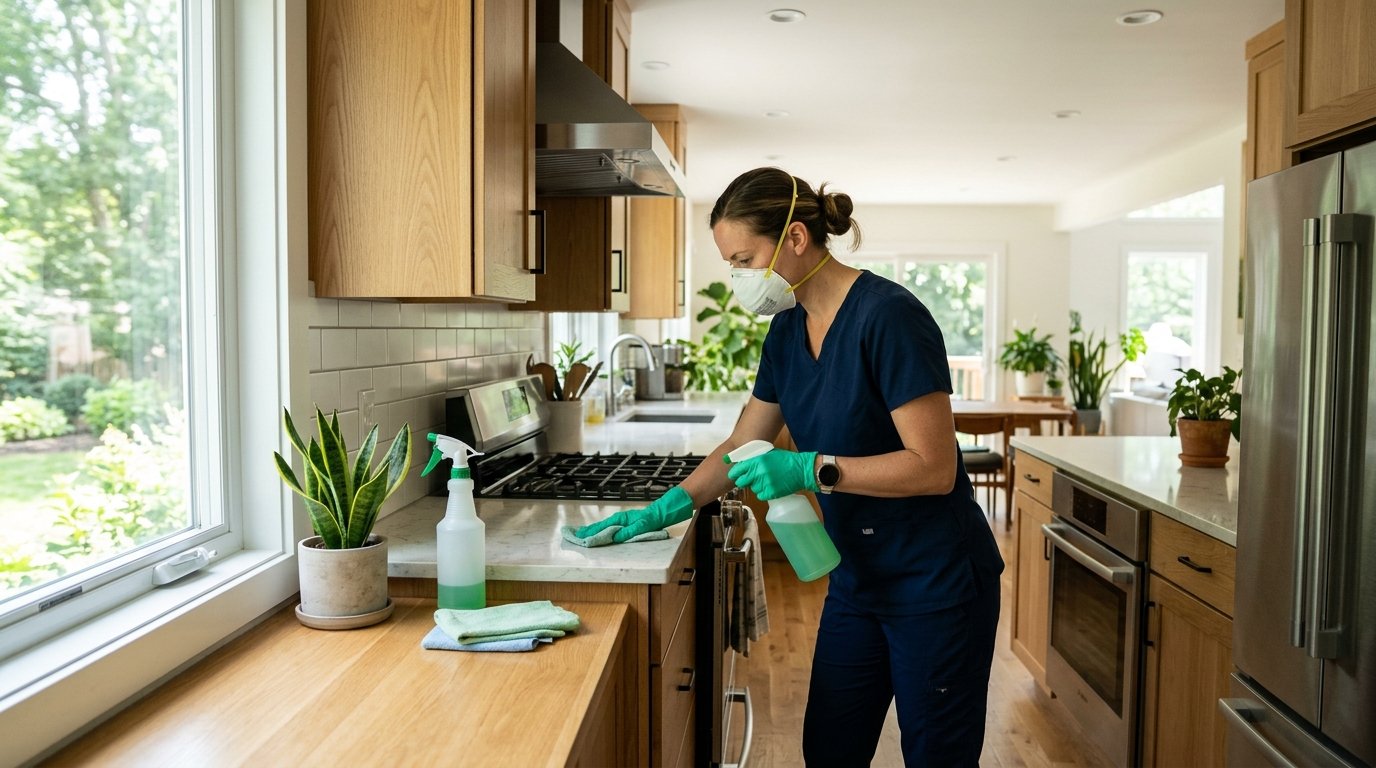
The hidden dangers of cleaning chemicals often show up quietly in residential spaces—through the air you breathe, the surfaces you touch, and residue that lingers long after the “clean” smell fades. If you’re dealing with headaches, irritation, or worries about kids, pets, or indoor air quality, it may be time to rethink what’s under your sink.
Below, we break down common residential cleaning health risks, what makes some products problematic, and practical, safe cleaning alternatives in New Jersey that still deliver a truly clean home.
Why Are Conventional Household Cleaners a Bigger Problem Than Many People Think?
The hidden dangers of cleaning chemicals aren’t only about dramatic accidents (though those do happen). More often, the issue is repeated exposure over time—especially in closed-up homes, smaller apartments, or spaces cleaned frequently.
Many conventional products contain fragrances, solvents, disinfectants, and degreasers that can irritate the eyes, nose, throat, and skin. Some people are more sensitive than others, including children, older adults, and anyone with asthma or allergies.
If you’re comparing options and want a more sustainable approach, our team focuses on environmentally responsible methods through our cleaning services designed to fit different homes and schedules.
What Are the Most Common Residential Cleaning Health Risks?
In many homes, cleaning is a weekly (or daily) routine, so even “normal” products can contribute to ongoing irritation. Residential cleaning health risks can be mild at first, which makes them easy to ignore.
- Respiratory irritation from fumes and aerosols, especially in bathrooms and kitchens
- Skin reactions like dryness, redness, or rashes from frequent contact
- Headaches or nausea triggered by strong fragrance blends or solvent-based sprays
- Eye irritation from splashes, airborne mist, or residue on surfaces
- Accidental poisoning risk when products are stored within reach of children
Even if no one in the household is “allergic,” irritation can still happen when ventilation is poor or products are used too heavily.
Which Ingredients and Product Types Tend to Cause the Most Trouble Indoors?
Toxic cleaning products near South Bound Brook, NJ (and everywhere else) commonly include strong degreasers, oven cleaners, drain openers, and heavily fragranced multi-purpose sprays. While labels and formulas vary, the highest-risk products are usually the ones designed to “cut through” grime fast using harsher chemistry.
Here are product types that often create problems in residential spaces:
- Chlorine bleach cleaners (especially when used frequently or in small bathrooms)
- Ammonia-based glass and surface cleaners
- Disinfectant foggers and aerosol sprays that stay suspended in air
- Acidic toilet bowl cleaners used alongside other chemicals
- Fragrance-heavy products marketed as “odor eliminators”
Ingredient lists can be confusing, and terms like “fresh scent” or “mountain breeze” don’t tell you what’s actually in the fragrance blend. If someone in your home is sensitive, “unscented” or low-odor options can be a meaningful change.
What Happens If You Mix Cleaning Products by Accident?
Mixing household cleaners can create dangerous fumes and should be avoided. The most well-known example is bleach combined with ammonia or certain acids, which can release toxic gases that irritate lungs and eyes and can be hazardous in enclosed spaces.
If you’re ever unsure whether products are safe to combine, don’t mix them. Use one product at a time, rinse thoroughly between steps, and ventilate. When in doubt, simplify the routine rather than layering multiple chemicals.
How Do Cleaning Chemicals Affect Indoor Air Quality in Bedrooms and Living Areas?
Indoor air quality is often worse than people realize because homes are designed to be energy-efficient and sealed. When you spray, wipe, and mop with conventional products, the fumes and residues can linger—especially on fabrics, rugs, and upholstery.
The “clean smell” many people associate with cleanliness is usually fragrance and volatile compounds, not proof that a surface is actually safer. If a product leaves a strong odor behind, that’s a sign it’s still in the air (and possibly on surfaces) after the cleaning is done.
For households trying to cut down on irritants without sacrificing results, eco-focused approaches like eco-friendly cleaning South Bound Brook, NJ often prioritize low-odor, non-toxic, and renewable product choices alongside careful technique and proper dwell time when disinfecting is truly needed.
What Are Safe Cleaning Alternatives in New Jersey That Still Work?
Safe cleaning alternatives in New Jersey are less about “never disinfecting” and more about using the least harsh option that gets the job done for the specific situation. A thoughtful routine can reduce exposure while still keeping kitchens, bathrooms, and high-touch areas hygienic.
Here are practical swaps many households find helpful:
- Microfiber cloths paired with gentle, low-residue cleaners for daily wipe-downs
- Fragrance-free or low-odor products to reduce headaches and irritation
- Targeted disinfecting for high-touch surfaces (instead of disinfecting everything)
- Mechanical cleaning methods (scrubbing, steam where appropriate, thorough rinsing)
- Better ventilation: open windows, run exhaust fans, and avoid spraying into the air
A key shift is focusing on process: using the right tool, allowing enough contact time when disinfecting is necessary, and removing residue rather than layering products.
If you’d like help building a safer routine that fits your home and priorities, you can learn more about our approach on our about page and explore options through our residential and commercial cleaning services.
How Can You Reduce Chemical Exposure Without Letting Your Home Get Less Clean?
The hidden dangers of cleaning chemicals can be reduced with a few routine changes that don’t compromise cleanliness. Many households see the biggest improvement by cutting fragrance, reducing aerosol sprays, and relying more on targeted cleaning instead of “all-in-one” product stacking.
- Use fewer products overall and avoid mixing cleaners
- Choose pump bottles over aerosols when possible
- Rinse surfaces that kids and pets touch often (floors, low cabinets, play areas)
- Ventilate during and after cleaning for at least 20–30 minutes
- Store products securely and keep originals labels intact
If you’re concerned about toxic cleaning products near South Bound Brook, NJ, consider doing a quick “product audit” and replacing the strongest offenders first (like drain openers and heavily fragranced sprays).
When Does It Make Sense to Hire a Professional for Eco-Friendly Cleaning in South Bound Brook, NJ?
It makes sense to hire a professional when you need consistent results, want to reduce exposure to harsh chemicals, or have a situation that benefits from a detailed, methodical clean (like move-in/move-out, seasonal deep cleaning, or preparing for guests). A well-trained team can also use better tools and processes, which often means less product is needed overall.
If you’re comparing options, start by reviewing our service offerings to see what fits your home, schedule, and priorities. If you’re ready to talk through details, you can request next steps through schedule a call or reach out via our contact page.
Take the Next Step Toward a Safer, Lower-Toxin Home
If the hidden dangers of cleaning chemicals have you rethinking your current routine, we can help you move toward safer, more sustainable cleaning without losing the comfort of a truly clean home. Learn more about Red Guild Cleaning LLC on our homepage, then explore our cleaning services to find the right fit.
To discuss eco-friendly cleaning in South Bound Brook, NJ and nearby communities, call (848) 216-6677, book a time through schedule a call, or send a message using our contact page.
Common Questions About the Hidden Dangers of Cleaning Chemicals and Safer Home Cleaning
Are “natural” or “green” cleaners always safe for kids and pets?
Not always. “Natural” doesn’t automatically mean non-irritating or non-toxic, and some essential oils and acids can still cause reactions. The safest approach is to use low-odor products, avoid aerosols, rinse high-contact surfaces, and store everything securely. If you have sensitivities, fragrance-free options often help reduce residential cleaning health risks.
What’s the biggest mistake people make with conventional cleaners?
Overusing them and mixing products. Using more product rarely cleans better, but it can leave more residue and worsen indoor air quality. Mixing cleaners can also create dangerous fumes. Stick to one product at a time, follow label directions, ventilate well, and prioritize safer, targeted methods for high-touch areas.
How can I tell if cleaning products are affecting my indoor air quality?
Common clues include lingering strong “clean” odors, headaches during or after cleaning, throat irritation, coughing, or watery eyes—especially in bathrooms and kitchens. If symptoms improve when windows are open or when you switch to low-odor options, that’s another sign. Eco-friendly cleaning South Bound Brook, NJ often focuses on reducing fumes and residue.
Do I need to disinfect my entire home to keep it healthy?
Usually, no. Most homes benefit more from consistent cleaning (removing dirt and grime) and targeted disinfecting on high-touch surfaces like handles and switches. Over-disinfecting can increase exposure to harsher chemicals without adding meaningful protection. Safe cleaning alternatives in New Jersey typically emphasize smart routines, correct product use, and good ventilation.
Where can I learn more about Red Guild Cleaning LLC’s approach?
You can read about our values and eco-conscious approach on our about page, review details on our services, and find additional answers on our FAQs page. If you want to talk through your needs, use our contact page or schedule a call.